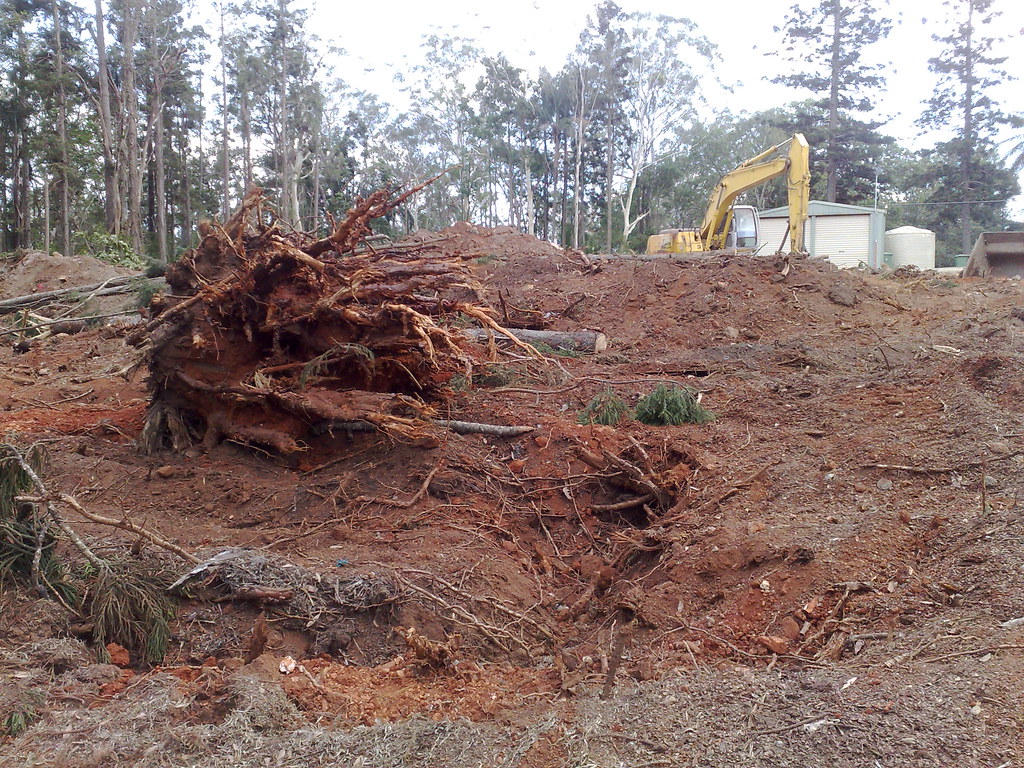
South Texas brush does not wait. Mesquite and huisache take over an empty lot in a few seasons, and once the roots are in, a mower and a chainsaw are not enough. Clearing it properly means dozers and excavators, root removal, and haul-off — so the brush does not grow straight back.
We clear residential lots, ranch acreage, fence lines and building sites across Webb County. The work starts with a walk of the lot: how dense the brush is, how big the trees are, where the equipment can get in, and what has to stay — a live oak you want kept, a fence line, an existing structure. Then you get one exact written price, and the clearing starts on your schedule.
Mesquite is the plant that defines this work. It grows fast, spreads by root and seed, and comes back from a stump if the root is left in the ground. Cutting it at the surface is a temporary fix. Real clearing takes the root ball out, grades the ground smooth, and hauls the debris away — otherwise you are paying to clear the same lot twice. Huisache is the same story on wetter ground near the river: dense, thorny, and quick to reclaim anything left alone.
What the lot becomes after clearing depends on the plan. A homesite needs the brush gone, the roots out, and the ground graded so a pad can be cut. Pasture needs the brush thinned or removed and the ground left usable for cattle or equipment. A fence line needs a clean corridor wide enough to work in. A commercial lot needs everything off and the ground ready for grading. The clearing is the same skill in each case; the finish is different, and we set it with you before we start.
Access decides a lot about the job. A wide-open ranch lot with a gate on a county road is straightforward. A tight in-town lot with neighbors on both sides needs smaller equipment, careful handling around fences and utilities, and a haul-off plan that does not tear up the street. We check all of that on the site visit, including overhead lines and buried utilities, so there are no surprises once the dozer is on the ground.
Here is what a clearing job actually looks like. We mark what stays and what goes, then work the lot in passes — brush and small trees first, then the bigger mesquite, then root removal and rough grading. Debris is piled, loaded and hauled off as we go, not left in a heap for you to deal with. When we leave, the lot is clear, the ground is workable, and the next step — a pad, a fence, a build — can start without another round of clearing.
One honest note about cost: land clearing is priced by the lot, not by the hour, because density and access change everything. A lightly brushed half-acre in town and ten acres of thick mesquite out toward Bruni are different jobs with different prices, which is why the on-site quote is free and exact. If another company gives you a number without walking the lot, treat it as a starting bid, not a price. Our quote covers clearing, root removal and haul-off, so the number you approve is the number you pay.
Before the equipment arrives, we sort out what stays. A mature live oak worth keeping, a fence line, an existing structure, a neighbor's boundary — all of it gets marked on the walk-through, and the operator works to those marks. Clearing around something worth saving takes a smaller machine and a slower hand, and that is part of the quote, not an afterthought. The same walk checks for buried utilities, overhead lines and septic systems, because a dozer does not forgive a missed line. If the lot borders a neighbor, we also agree on where debris goes and where equipment crosses, so the job does not become a dispute.
Burning the brush is rarely the answer here. In dry South Texas conditions open burning is restricted and often not an option at all, and a brush pile left to rot brings its own problems — snakes, insects and a fire risk of its own. Haul-off costs more up front than a match, but it is the only finish that leaves the lot genuinely clean. Debris goes to a proper disposal site, not a ditch or a back corner of the property, and the lot is left graded and workable rather than scarred by burn piles.
Timing matters more than most owners expect. Clearing in the dry months means firm ground for heavy equipment and no ruts to repair later; clearing after the rains means mud, stuck machines and a torn-up lot. And a cleared lot should not sit bare for long — once the brush is gone, the next step is grading, and then ground cover or construction, before erosion and new brush take hold. We schedule the work so the lot moves straight from cleared to graded to ready, instead of sitting open through a rainy season.
What's Included
- Mesquite, huisache and brush cleared to the root
- Root balls removed so brush does not grow back
- Debris piled, loaded and hauled away
- Rough grading so the lot is ready for the next step
- Fence lines and building sites cleared to your marks