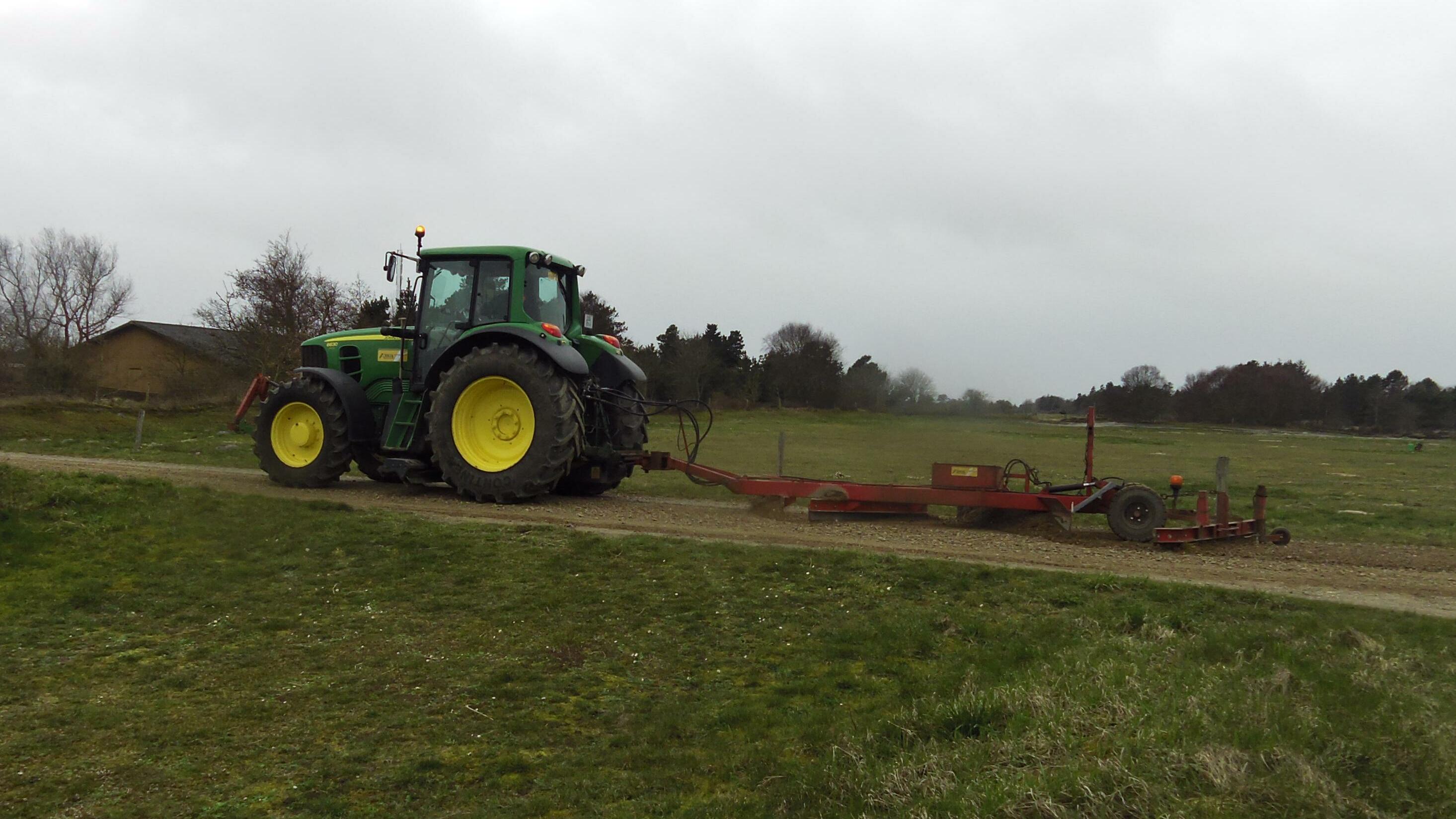
A house is only as good as the pad it sits on. In Webb County that means cutting the lot to grade, handling the caliche and clay, and making sure water runs away from the slab — not toward it. Get the grading wrong and you pay for it in every rainy season after.
We prep homesites, shop pads, driveways and commercial lots across Laredo and Webb County. The work starts with a walk of the lot: the natural slope, the soil, where the water goes now, and where the building will sit. Then you get one exact written price, and the dirt work starts on your schedule.
Grading is mostly about water. Laredo storms drop a lot of rain in a short time, and a lot that looks flat can hold water against a foundation for days. The fix is grade: the ground around the building slopes away from it, swales and ditches carry water to the street or the low corner, and the pad itself sits high enough that a hard rain never reaches the slab. That is decided with a level and a plan, not by eye.
The soil here is part of the job. Caliche is hard to cut and easy to build on once it is shaped; clay moves with moisture and needs careful compaction. A pad cut into the wrong layer, or fill that was never compacted, settles unevenly — and a settling pad cracks slabs, sticks doors and breaks pipes. We cut to solid ground, compact in lifts, and check the grade as we go, so the pad is still level years later.
Driveways and access matter as much as the pad. A driveway that holds water ruts out in a season; one graded with a crown and a ditch on the side sheds water and lasts. Ranch roads and equipment access need the same thinking at a bigger scale: a base that holds up under loaded trucks, drainage that keeps the road passable after rain, and a surface that does not wash out in the first storm.
Here is what a site prep job actually looks like. We clear and grub the building area first, then cut the pad to grade, bring in fill where the lot is low, and compact it in layers. Drainage goes in as we grade — swales, ditches, culverts where a drive crosses a low spot — and the finished pad is checked with a level before we call it done. When we leave, the lot is ready for the builder, the concrete crew or the next trade, with no rework waiting for them.
One honest note about cost: site prep is priced by the lot, not by the hour, because slope, soil and access change everything. A flat in-town lot and a sloped ranch parcel with caliche are different jobs with different prices, which is why the on-site quote is free and exact. If another company gives you a number without walking the lot, treat it as a starting bid, not a price. Our quote covers cutting, fill, compaction and drainage, so the number you approve is the number you pay.
Compaction is where a pad is won or lost, and it is the part you cannot see once the builder starts. Fill placed in a thick layer and driven over once will settle — a little at first, then more after the first heavy rain, and by then the slab is poured and the fix is expensive. We place fill in thin lifts and compact each one, checking as we go, so the finished pad is uniform from edge to edge. On clay ground that means watching moisture too: clay that is too dry will not compact, and clay that is too wet turns to mush under the roller. The right moisture, the right lift thickness and the right number of passes are what make a pad that stays level.
Drainage design starts from the lot, not from a template. A lot near the river or a low-lying area needs a different answer than a lot on a rise — swales that carry water to the street, a culvert where a driveway crosses a ditch, a French drain where water collects against a slope. We look at where water comes from in a hard rain, where it goes now, and where it should go, then build the grade around that. The goal is simple to state and hard to fake: after the biggest storm of the year, no water stands against the building and no ruts cut across the driveway.
We work from your survey and your builder's plans, not from memory. The pad elevation, the finished floor height, the driveway slope and the drainage outlets are all set from stakes and a level before dirt moves, and checked again before handoff. If the plans change mid-job — a bigger shop, a shifted driveway, a different finished floor — we re-grade to the new numbers rather than approximating. The builder should be able to set forms on the pad the day we leave, with no rework and no phone call asking us to come back and fix a low corner.
What's Included
- Building pads cut to grade and compacted in lifts
- Driveways graded with crown and drainage
- Swales, ditches and culverts so water runs off
- Fill brought in and compacted where the lot is low
- Final grade checked with a level before handoff