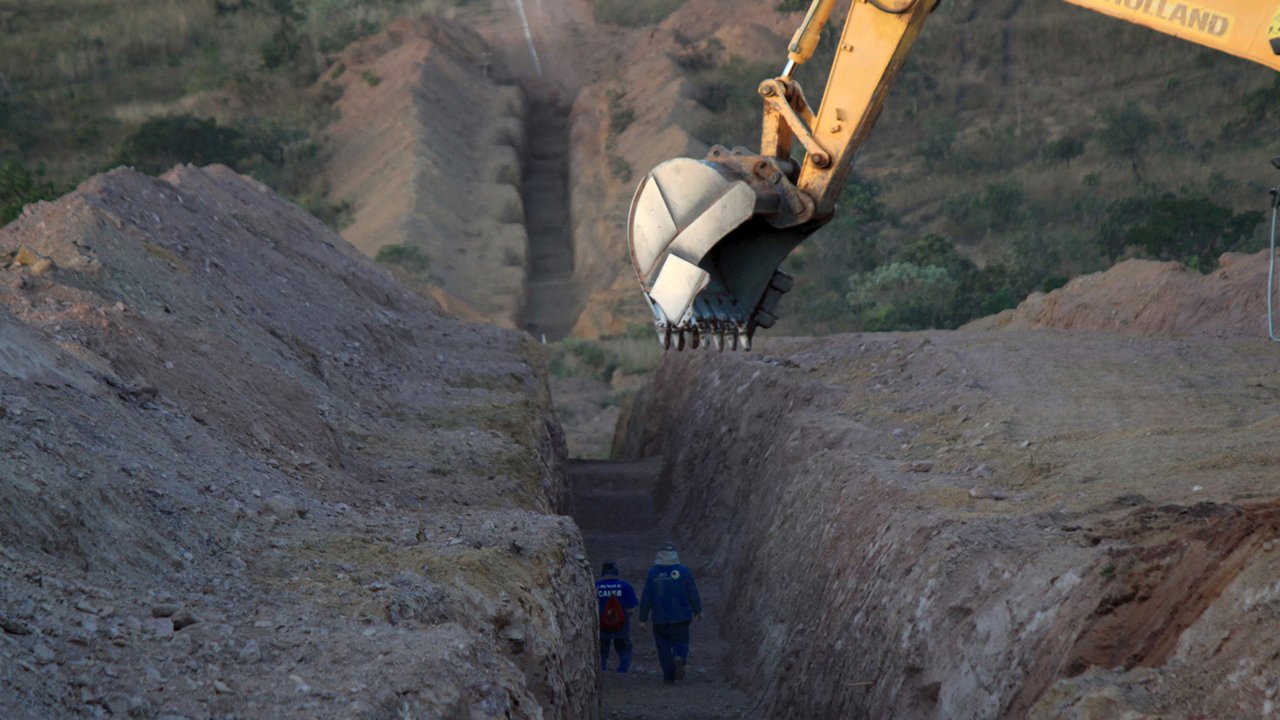
Every rural property eventually needs a trench: a water line to the house, power to a barn, a sewer line, a drainage ditch that actually drains. A trench dug wrong — too shallow, backfilled with rock, or sloped the wrong way — is a repair waiting to happen.
We dig utility trenches for homes, ranches and commercial lots across Webb County. The work starts with a walk of the route: where the line runs, what it crosses, how deep it needs to be, and what is already buried there. Then you get one exact written price, and the digging starts on your schedule.
Depth and slope are the whole job. A water line needs to be deep enough to stay safe from traffic and digging; a sewer line needs a steady fall from the house to the tank or the street, because a flat spot becomes a blockage; a drainage trench needs to fall toward the outlet every foot of the way. We check grade as we dig, not after, so the line works the first time.
What is already in the ground matters as much as what you are putting in. Webb County lots can hide old water lines, septic lines, electric runs and gas lines, and hitting one turns a simple trench into an expensive repair. We call in locates, check for anything unmarked on the route, and dig carefully around what we find — a little caution up front is far cheaper than a cut line.
Backfill is where cheap trenching shows. Rock and caliche chunks thrown back into the trench damage pipe and settle unevenly, leaving a sunken line across the yard. We bed the pipe in clean material, backfill in layers, and compact as we go, so the trench line does not sink into a ditch after the first rain. The surface is left graded and clean, not mounded and rutted.
Here is what a trenching job actually looks like. We mark the route, call in locates, and dig the trench to the depth and grade the line needs. The pipe or conduit goes in, is checked for grade and connections, and is bedded and backfilled in layers with compaction. Where the trench crosses a driveway or road, we handle the crossing properly — bored, sleeved or cut and restored — so the surface holds up under traffic. When we leave, the line is buried, the ground is level, and the yard is usable.
One honest note about cost: trenching is priced by the job, not by the hour, because length, depth, soil and crossings change everything. A short water line across a flat yard and a long sewer run through caliche with a road crossing are different jobs with different prices, which is why the on-site quote is free and exact. If another company gives you a number without walking the route, treat it as a starting bid, not a price. Our quote covers digging, bedding, backfill and compaction, so the number you approve is the number you pay.
Different lines need different trenches, and treating them all the same is how lines fail. A water line needs steady depth and protection from traffic and future digging; an electric line goes in conduit, at its own depth, with warning tape above it so the next person to dig knows it is there; a sewer line lives or dies by its fall, and a flat spot or a bellied section becomes a blockage that has to be dug up again. A drainage trench is a different job again — it needs a continuous fall to the outlet and an outfall that actually drains, not a ditch that ends in a puddle. We dig each one to the standard that line needs, not to a single generic depth.
Long ranch runs bring their own problems. A water line to a barn or a trough a quarter-mile from the house crosses fences, low spots and arroyos, and every crossing needs thought — a culvert where water flows, a deeper section where equipment crosses, a marker where the line turns. On big properties we also mark the route when we are done, so the next fence post or planting does not go through the line you just paid to bury. A trench that nobody can find again is a trench that gets cut again.
Crossings deserve special care. Where a trench passes under a driveway or a county road, the line needs protection — sleeved, bored or properly restored — because a line crushed under a loaded truck is a repair that costs more than the original trench. We handle the crossing as part of the quote, including restoring the surface so it holds up under traffic and does not settle into a dip. And where a trench has to pass near a septic system, a foundation or another utility, we keep the clearances the job needs and dig by hand around anything fragile, because one careless bucket can turn a simple trench into a week of repairs.
What's Included
- Trenches dug to the depth your line needs
- Grade checked as we dig — sewer and drainage fall right
- Locates called in and existing lines protected
- Pipe bedded in clean material, backfilled in layers
- Driveway and road crossings handled properly